

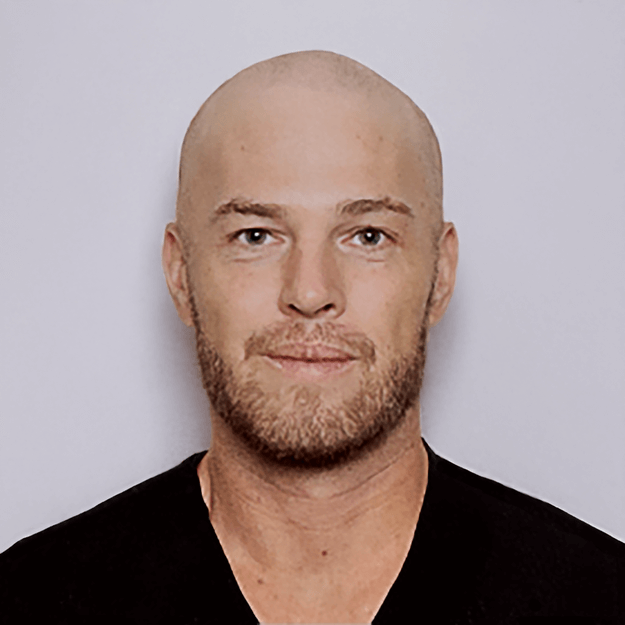
President Trump has nominated former Fed Governor Kevin Warsh to be the next Fed chair. So it’s fair to ask what Warsh stands for, and what might that tell us about what he’s likely to do as Fed chair.
Background
Warsh fits the typical mold of a central banker and DC bureaucrat. He has a bachelor’s degree in public policy from Stanford and a law degree from Harvard.
After school, Warsh landed at influential institutions in both the private and public sectors—he spent seven years at Morgan Stanley before serving various roles in the Bush administration from 2002 to 2006.
Bush nominated Warsh to the Fed’s Board of Governors in early 2006, where he served until March 2011. After that, Warsh has most notably been a lecturer at Stanford and served as a partner at Stanley Druckenmiller’s Duquesne Family Office.
There can be no doubt: Warsh is an insider.
But there are glimmers of hope for free-market proponents and anyone tired of the status quo. If we are to judge a man by his enemies, Warsh can’t be all bad; Paul Krugman once said Warsh was “wrong about everything” in reference to his criticism of Bernanke’s policies during the global financial crisis (GFC).
GFC and QE1
Before highlighting some of his more promising statements, we must first address Warsh’s black eye.
During a 2025 interview with Stanford’s Hoover Institution, Warsh said of the housing bubble and ensuing GFC that “no one predicted it. No one saw it [coming].”
This is simply untrue.
It’s unsettling for Warsh to have made that declaration just last year, nearly two decades after the house of cards collapsed. Can he really be unaware of the many accurate forecasts from various free-market economists? Do they not deserve credit? Did they teach him nothing? Or is he just lying?
Warsh calls himself a leader and champion of the first round of quantitative easing (QE1), stating he was “side by side” with Bernanke. This is another demerit for Warsh—though wholly unsurprising given his academic and professional background.
Thankfully, he is not oblivious to the struggles of the average Joe.
Reverse Robin Hood
Warsh is unafraid to stray from his peers. Beginning in 2010, Warsh advocated ending QE and other measures taken by the Fed. Citing his disagreement with Fed policy, Warsh ultimately resigned from his position in 2011. He called Bernanke’s balance sheet activism “reverse Robin Hood.”
During a 2018 interview with the Hoover Institution, Warsh explained, “Quantitative easing, outside of crises, works very well for people that already have large amounts of assets.” He warned that the Fed’s monetary policy was having “huge distributional consequences in times of economic growth.” Although he didn’t say its name, Warsh was describing the Cantillon effect.
Speaking about the division in American politics, Warsh identified the Fed’s response to the GFC as a bigger factor than most commentators believe. Not that the bar is particularly high, this is still a refreshing statement from a DC insider and classically trained economist (especially from 2018).
The so-called K-shaped economy and affordability crisis are direct results of both monetary and profligate fiscal policy, something Warsh admits the Fed has facilitated.
So credit where due: Warsh is not allergic to placing blame on the Fed.
Gold and Inflation
Sorry, hard-money advocates… don’t get your hopes up.
Warsh was presented with a quote from Jim Grant that called today’s system the opposite of a gold standard: “One might call it the PhD standard. It’s the system of discretionary manipulation of interest rates by doctors of economics.”
Asked to respond, Warsh replied, “There is no status quo ante to return to.” After mentioning his conservative friends’ calls for a return to the gold standard, Warsh insisted “the world has moved on.”
Warsh might differ from Bernanke on the appropriate level and timing of QE, but it appears they both believe central bankers hold gold for “tradition.”
The interviewer then recalled a famous quote from Milton Friedman: “Inflation is always and everywhere a monetary phenomenon.” Warsh interpreted this quote from his former professor to mean “inflation is a choice.”
Overconfidently, Warsh claimed the Fed “can hit any price level that it wants”—seemingly in reference to official inflation metrics.
Admirably, Warsh said that for the Fed to blame inflation on anyone else would be “antithetical to good economic history.”
Warsh Is No Ron Paul
In 2017, Warsh published an op-ed in the Wall Street Journal calling for the Fed to become more strategic. His arguments included:
- A strict 2% inflation target offers false precision and undermines credibility.
- The Fed should stop playing games with the Phillips curve and stop responding to monthly payroll data.
- A call to elevate the importance of nonwage prices, including commodity prices. Stop treating labor market data as the ultimate arbiter of price stability.
- Assessing monetary policy by examining the business cycle and financial cycle. Stop focusing on financial assets while doing little to bolster the real economy.
- The Fed should pursue strategies focused on the medium term.
In the 2025 Hoover Institution interview, Warsh said the Fed “doesn’t need a revolution. It’s had a revolution in the last decade. What it needs is some degree of restoration.”
First Moves As Fed Chair?
US federal debt-servicing payments had skyrocketed before the 2025 Hoover Institution interview was published, so Warsh is well aware of the problem.
Asked how to handle government debt and deficits with ballooning debt-servicing payments, Warsh predictably resorted to the Fed’s primary tools: interest rates and the Fed’s balance sheet. He explained that it would be much easier to lower rates if the Fed shrank its balance sheet.
Warsh explicitly blamed inflation on the expansion of the Fed’s balance sheet.
He lamented the blurring of the line between the federal government and the Fed, noting it has brought politics into Fed policy. Warsh stressed the importance of growing the “real economy” in the name of “revenue, fairness, efficiency, and growth.”
Yes, yes… actions are more important than words. But this kind of talk is radically different from what was offered by Bernanke, the architect of many policies that still ail our economy today.
FOMC
The Federal Open Market Committee first convened in 1933 and has existed in its current form since 1936.
The Fed chair casts only one of twelve votes. Despite meeting nearly 300 times, the other members have never managed to outvote the Fed chair.
I can’t tell you if that streak will come to an end. But Warsh seems very serious about unwinding the Fed’s balance sheet, which would send shockwaves through the markets and global financial system. It’s hard to imagine a majority of FOMC voting members going along with this.
Conversely, it’s easy to see FOMC members disagreeing about the timing of changes to the Fed funds rate.
A divided, chaotic Fed seems unlikely to be good for Wall Street.
Then again, war and a weakening US labor market may fan the flames of fiscal dominance, limiting the impact of Fed policy regardless of divisions.
But risk on or risk off, savvy resource speculators will thrive.
KJ
P.S. Trump’s tariffs have been overturned, there’s war in the Middle East, and a new Fed chair is coming soon… there will be volatility. See how Lobo is playing it by subscribing to our free, no-hype, no-spam newsletter: The Digest.


